Fibre Reinforced Plastic (FRP) is rapidly becoming a preferred material across a range of industries—but what exactly is it, and why is it gaining traction?
This guide breaks it down.
From wastewater treatment plants and mining sites to commercial rooftops and industrial facilities, Fibre Reinforced Plastic (FRP) is becoming an increasingly common material for access systems and structural applications.
But what exactly is FRP, and why are so many industries choosing it over traditional materials like steel, aluminium and timber?
This guide explains what FRP is, how it is manufactured, where it is used and the practical benefits it offers across demanding industrial environments.
What is FRP?
Fibre Reinforced Plastic (FRP) is a composite material that combines high-strength reinforcing fibres with a plastic resin to create a lightweight yet exceptionally durable structural material.
Unlike metals, FRP doesn’t rely on a single material for its strength. Instead, it combines two key components that work together:
Reinforcing Fibres
The fibres provide the structural strength of the material. Depending on the application, these may include:
- Glass fibre (the most common for industrial applications)
- Carbon fibre
- Aramid fibre (such as Kevlar®)
Glass fibre is widely used because it offers an excellent balance of strength, corrosion resistance and cost-effectiveness.
Polymer Resin
The resin binds the fibres together while protecting them from moisture, chemicals and environmental exposure.
Common resin systems include:
- Polyester
- Vinyl ester
- Epoxy
The resin selected depends on the environment the product will operate in, particularly where chemical resistance or fire performance is required.

How is FRP Manufactured?
Industrial FRP products are commonly manufactured using one of two methods.
Pultrusion
Pultrusion is a continuous manufacturing process that produces structural shapes with consistent strength and dimensional accuracy.
Typical pultruded products include:
- Structural beams
- Handrails
- Stair stringers
- Angles
- Channels
- Square and rectangular profiles
Because the reinforcing fibres run continuously through the profile, pultruded FRP delivers excellent structural performance.
Moulding
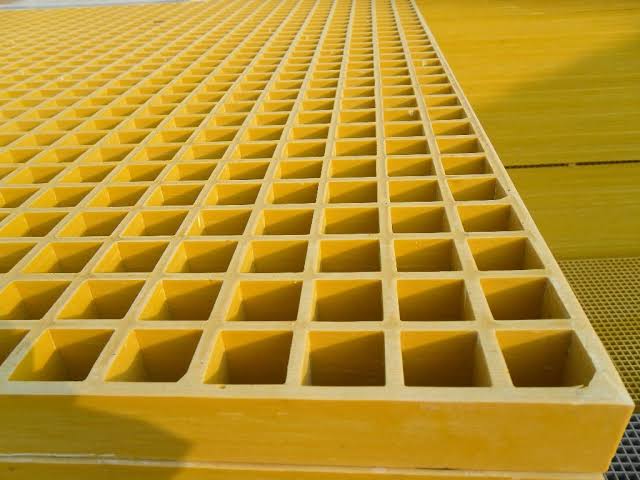
Moulded FRP grating is produced by placing layers of reinforcing fibres into a mould before resin is added.
This creates a panel with strength in multiple directions, making it ideal for:
- Walkways
- Platforms
- Drainage covers
- Access flooring
- Trench covers


Why is FRP Different?
Traditional construction materials each have their strengths—but they also have limitations.
Steel is strong but susceptible to corrosion.
Aluminium is lightweight but can deform under heavy loading.
Timber can rot, warp and require ongoing maintenance.
FRP combines many of the advantages of these materials while reducing many of their drawbacks.

Key Benefits of FRP
Lightweight
FRP can weigh up to 75% less than steel, making transportation, handling and installation significantly easier.
A lighter system often means:
- Smaller lifting equipment
- Faster installation
- Reduced labour
- Lower transport costs
- Less load on existing structures
This is particularly valuable on rooftops, elevated platforms and retrofit projects.
Excellent Corrosion Resistance
Unlike steel, FRP will not rust when exposed to moisture.
It also performs exceptionally well in environments containing:
- Salt spray
- Coastal conditions
- Wastewater
- Chemicals
- Fertilisers
- Industrial processing environments
This makes FRP particularly suitable for industries where corrosion is a constant maintenance challenge.
Low Maintenance
Because FRP doesn’t require painting, galvanising or corrosion treatment, maintenance requirements are significantly reduced.
This can result in:
- Lower maintenance costs
- Less downtime
- Longer replacement intervals
- Improved whole-of-life value
High Strength-to-Weight Ratio
Although lightweight, FRP offers impressive structural performance.
Properly engineered FRP systems are capable of supporting significant loads while maintaining excellent stiffness and durability.
For many industrial applications, this combination of strength and low weight provides substantial installation and operational advantages.
Slip Resistance
Safety is one of the primary reasons organisations specify FRP.
Moulded FRP grating is available with anti-slip surfaces that provide excellent grip, even in wet or contaminated environments.
This makes it well suited to:
- Walkways
- Platforms
- Stair treads
- Maintenance access routes
Electrical and Thermal Insulation
Unlike steel, FRP is naturally non-conductive.
This makes it suitable for applications around:
- Electrical installations
- Switchrooms
- Substations
- Water treatment facilities
- Processing plants
Its low thermal conductivity also means it remains more comfortable to walk on in extreme temperatures.
Common Applications
FRP is now used across a broad range of industries, including:
Mining
- Conveyor access
- Processing plants
- Maintenance platforms
- Stairs and handrails
Water & Wastewater
- Treatment plants
- Chemical dosing areas
- Clarifiers
- Pump stations
Industrial Facilities
- Access platforms
- Elevated walkways
- Machine guarding
- Bund crossovers
Commercial Buildings
-
Rooftop HVAC walkways
- Maintenance platforms
- Plant access systems
Infrastructure
- Bridges
- Public access walkways
- Marine structures
- Coastal infrastructure
Why More Projects are Choosing FRP
Asset owners are increasingly considering the whole-of-life cost of infrastructure rather than focusing solely on the initial purchase price.
While FRP may have a higher upfront cost than some traditional materials, its reduced maintenance requirements, corrosion resistance and long service life often deliver lower lifecycle costs.
For many facilities, this translates into:
- Reduced maintenance shutdowns
- Improved worker safety
- Faster installation
- Lower ongoing operational costs
- Longer service life
Choosing the Right FRP System
Not all FRP products are the same.
The correct solution depends on several factors, including:
- Design loads
- Span requirements
- Chemical exposure
- Fire performance requirements
- UV exposure
- Slip resistance
- Access frequency
- Applicable Australian Standards
Every project should be engineered to suit its operating environment and intended application.
Why FRP Engineering?
At FRP Engineering, we design, fabricate and install custom FRP access systems tailored to each project’s unique requirements.
From walkways and platforms to stairs, handrails, covers and crossover structures, our team works closely with clients to deliver safe, compliant and practical solutions that are built to perform in demanding environments.
By combining thoughtful engineering with prefabricated FRP systems, we help minimise installation time, reduce maintenance requirements and improve long-term asset performance.
Conclusion
FRP is more than an alternative to traditional materials—it’s an advanced engineering solution that offers outstanding durability, corrosion resistance and long-term value.
As industries continue to prioritise safety, efficiency and lifecycle performance, FRP is becoming the preferred choice for access systems across mining, infrastructure, utilities and industrial facilities.
If you’re planning a new project or upgrading an existing site, understanding the capabilities of FRP is the first step towards choosing the right solution for the job.